
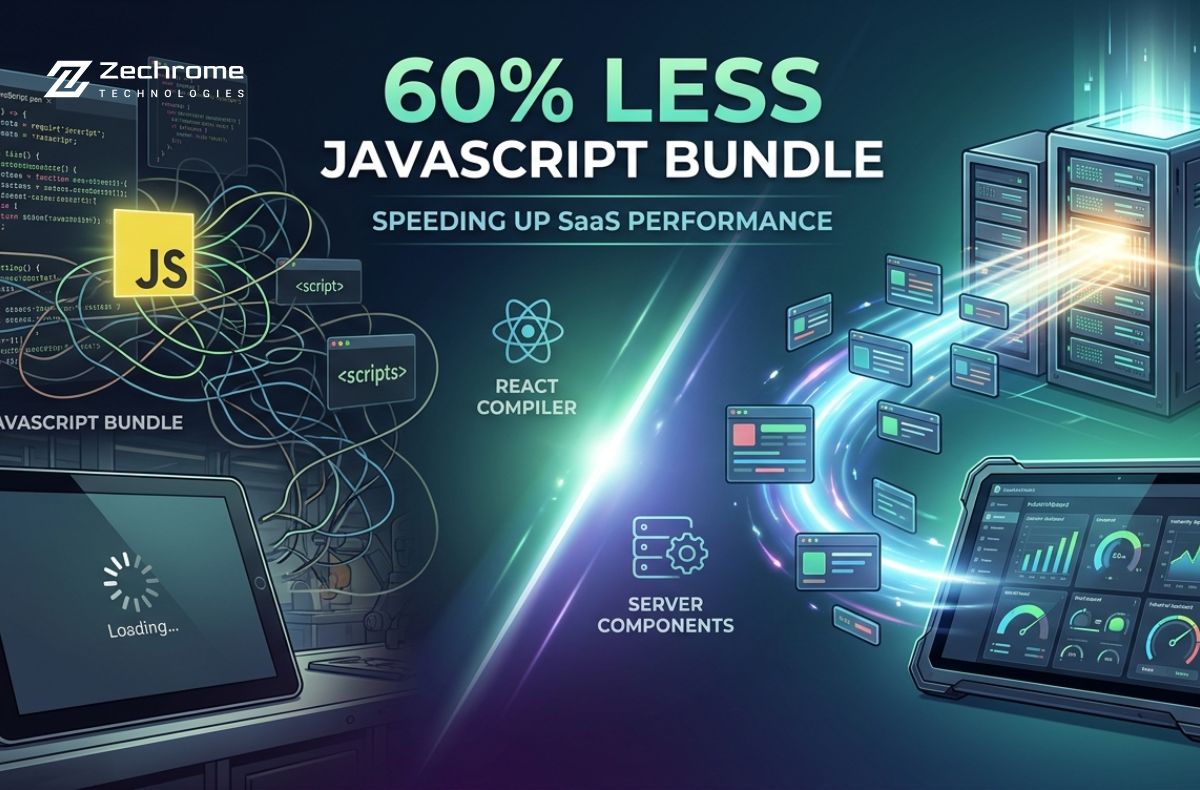

In the competitive landscape of B2B software, speed isn’t just a technical metric—it’s a core pillar of the user experience. Imagine a high-stakes environment like a manufacturing plant or a busy laboratory. When a supervisor opens a dashboard to check real-time data, every second of “loading” represents a gap in oversight.
At Zechrome Technologies, we noticed a trend: as our SaaS solutions became more powerful, they also became “heavier.” We were packing in more features, more data visualizations, and more complex logic, which meant our JavaScript bundle was growing.
We decided to draw a line in the sand. By rethinking our architecture and embracing the latest 2026 web standards, we successfully slashed our bundle size by 60%. Here is the roadmap we used to make our web applications run with the fluid speed of native desktop software.
The Growing Crisis of “JavaScript Fatigue”
For years, the trend in web development was to push as much logic as possible to the “client side” (the user’s browser). While this made apps interactive, it created a massive bottleneck. The browser has to download the code, parse it, and then execute it.
For a B2B user perhaps running an older office laptop or a tablet on a factory floor this leads to “input lag,” where the screen freezes for a split second every time they click a button. At Zechrome, we realized that to provide a professional-grade experience, we had to stop treated the browser like a heavy-duty server.
1. The Power of the React Compiler
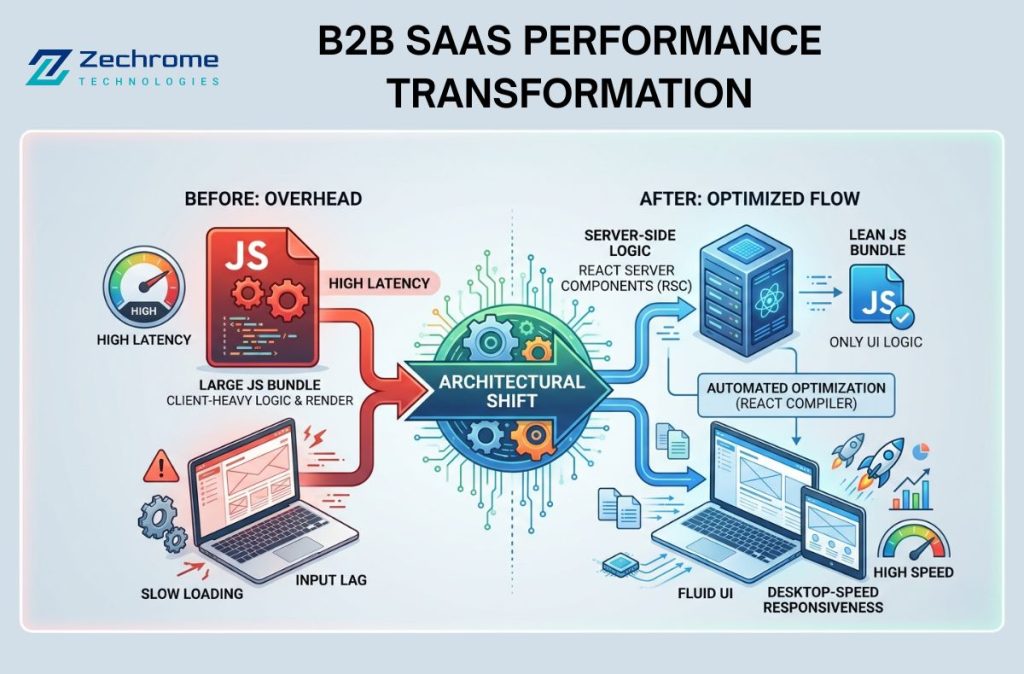
The biggest turning point in our journey was the implementation of the React Compiler. In the past, developers spent hours manually optimizing code using tools like useMemo to make sure the app didn’t refresh unnecessarily.
The React Compiler has changed the rules of the game. It automatically analyzes the code and optimizes it during the build phase, before it ever reaches the user.
- Leaner Code: It eliminates the need for extra “boilerplate” code that used to take up space in the bundle.
- Predictable Performance: It ensures that only the parts of the screen that actually change get updated, which keeps the frame rate high and the experience smooth.
- Developer Efficiency: Our team can focus on building great features for our clients instead of micro-managing performance fixes.
2. Embracing the “Server-First” Architecture
While the compiler made our front-end smarter, React Server Components (RSC) made it lighter. We shifted our philosophy: if the user doesn’t need to interact with a specific piece of logic, that logic should stay on the server.
Instead of sending a massive JavaScript file that tells the browser how to fetch and format data, we now perform those heavy calculations on our high-speed servers. The server then sends over the final, ready-to-display UI.
This approach has been a game-changer for our B2B clients. It means that complex industrial reports or deep-data audits load almost instantly, because the user’s device is only doing the “rendering,” not the “heavy thinking.
3. Why “Desktop-Speed” Matters for Industry 4.0
In the sectors Zechrome Technologies serves such as Industrial Automation, LIMS, and Enterprise ERP software is a tool, not a distraction. When a web app feels as responsive as a native desktop program:
- Workflows Flow Better: There is no “micro-frustration” caused by waiting for pages to catch up to the user’s thoughts.
- Better Data Security: By keeping logic on the server, we reduce the amount of sensitive business logic exposed in the browser’s source code.
Sustainability: Leaner apps require less processing power, which extends the battery life of mobile devices used on-site and reduces the carbon footprint of digital operations.
The Result: A Leaner, Faster Future
By reducing our bundle size by 60%, we haven’t just made our apps faster; we’ve made them more accessible and reliable. Our platforms now offer the best of both worlds: the easy accessibility of a web browser with the raw power and snap of a desktop installation.At Zechrome Technologies, we believe that B2B software shouldn’t be a burden on your hardware. It should be the engine that drives your business forward light, fast, and unfailingly efficient.
