
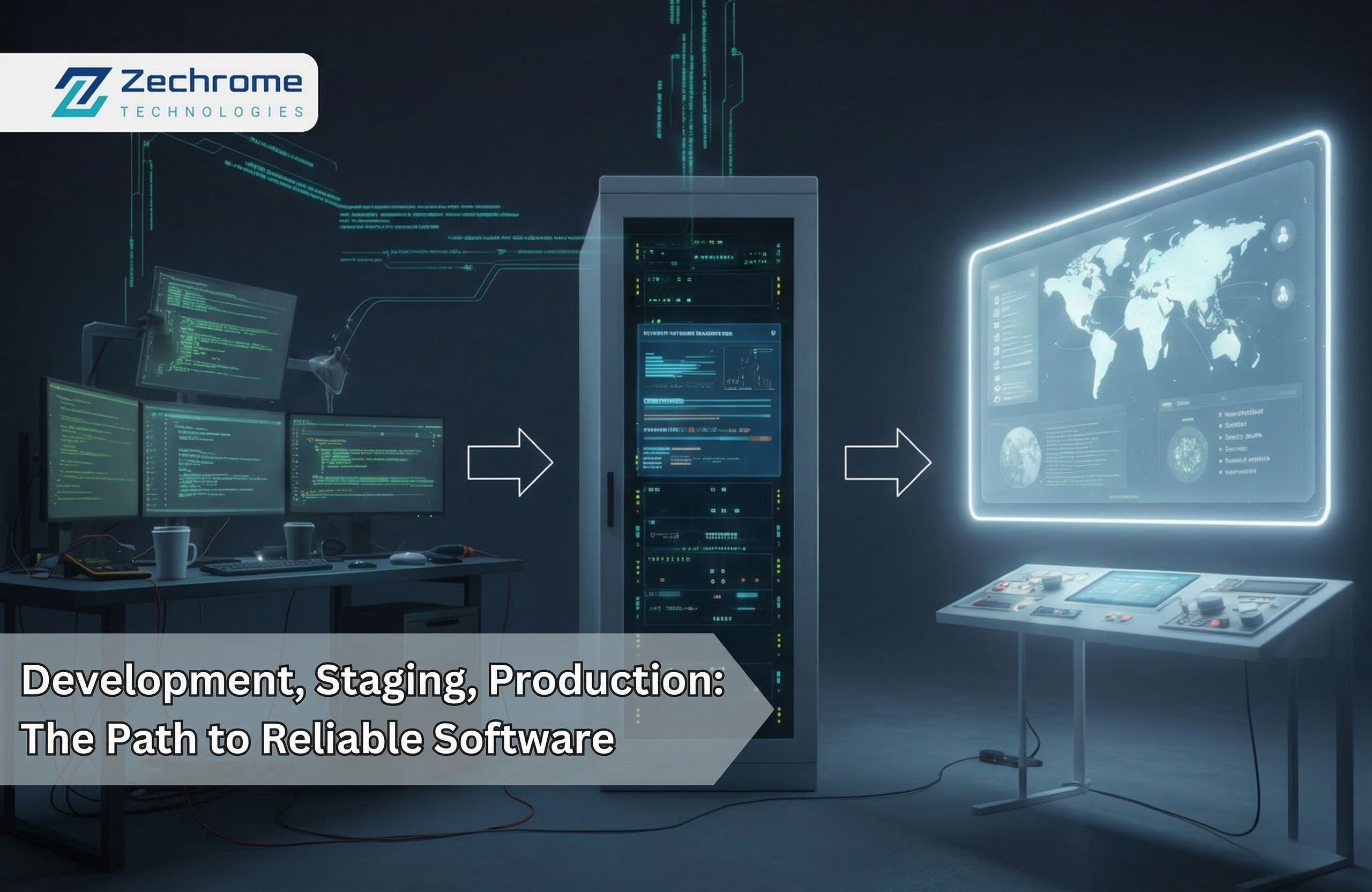

Modern software development isn’t just about writing code, it’s about how that code moves safely from an idea to a live product.
That’s where Development, Staging, and Production environments play a critical role.
By clearly separating these environments, teams can build faster, test smarter, and deploy with confidence without putting live users at risk.
Why Environment Separation Matters:
Without proper environment management, teams often face:
- Unexpected bugs in live systems
- Inconsistent testing results
- Risky deployments and rollbacks
- Poor collaboration between developers and QA teams
A structured environment strategy helps maintain stability, scalability, and reliability across the entire software lifecycle.
Development Environment: Where Ideas Take Shape:
The Development (Dev) environment is where developers actively build and experiment.
Key Characteristics
- Used for coding new features and fixing bugs
- Rapid changes and frequent updates
- May include mock data or local databases
- Debugging tools enabled
This environment prioritizes speed and flexibility over stability. Breaking things here is expected and encouraged because it prevents issues from reaching later stages..
Staging Environment: The Final Checkpoint:
The Staging environment closely mirrors production and acts as a pre-launch testing ground.
What Happens in Staging
- Full application testing with real configurations
- Integration and regression testing
- Performance and security checks
- User acceptance testing (UAT)
Staging answers one critical question:
“Will this work exactly the same way in production?”
Only code that passes staging validation moves forward.
Production Environment: Where Users Interact:
The Production environment is the live system accessed by real users.
Production Priorities
- High availability and performance
- Secure data handling
- Minimal downtime
- Controlled deployments
Changes here are deliberate and carefully monitored, often using CI/CD pipelines, version control, and rollback strategies to ensure business continuity.
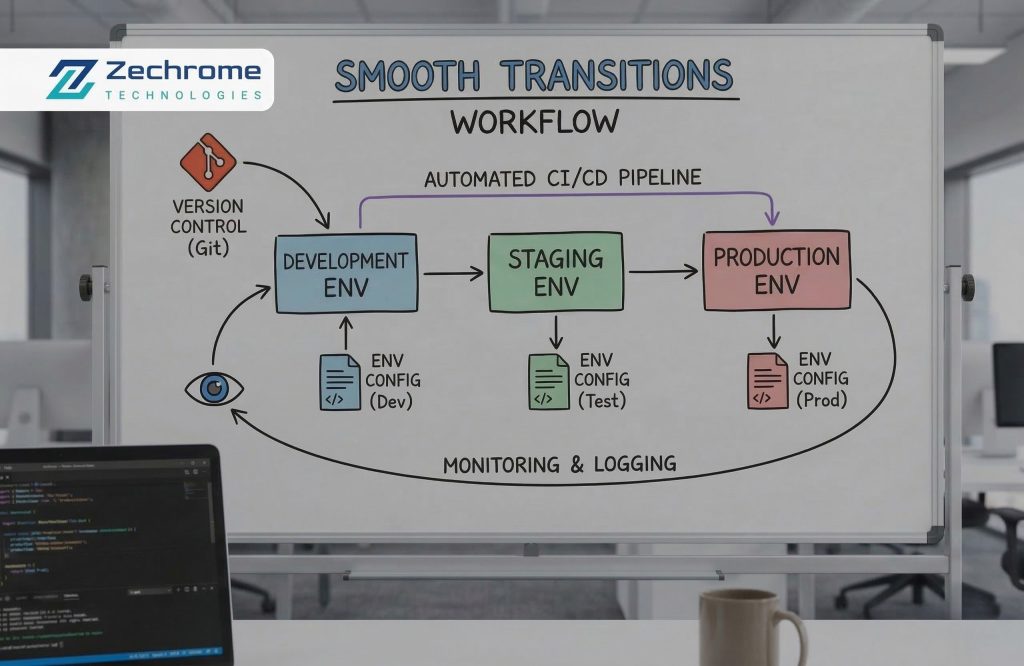
How We Ensure Smooth Transitions Between Environments:
A well-managed workflow connects all three environments seamlessly:
- Version control to track and review changes
- Automated CI/CD pipelines for consistent deployments
- Environment-specific configurations to avoid conflicts
- Monitoring and logging to catch issues early
This structured approach reduces deployment risks while maintaining development velocity.
Common Mistakes to Avoid:
Even experienced teams can slip up. Some common pitfalls include:
- Testing directly in production
- Inconsistent configurations across environments
- Sharing credentials between environments
- Skipping staging due to time pressure
Avoiding these mistakes is key to maintaining long-term system stability.
Our Approach in Practice:
At Zechrome Technologies LLP, we follow a disciplined environment strategy to ensure every release is stable, secure, and scalable. By maintaining clear separation between development, staging, and production, we help teams deliver reliable software while minimizing operational risk.
This approach enables faster innovation without compromising system performance or user experience.
Development, Staging, and Production environments aren’t optional; they are foundational to reliable software delivery.
When each environment has a clear purpose and is managed correctly, teams can innovate faster without compromising quality or user trust.
